


 Cart
Cart
 sales@molnova.com



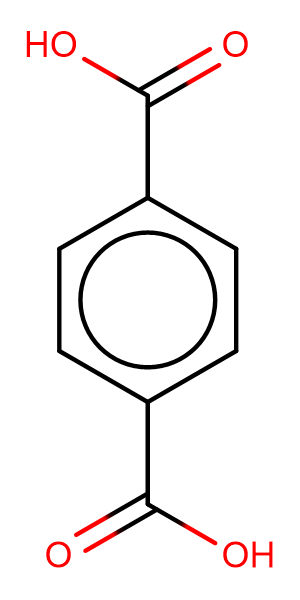
Terephthalic acid
CAS No. 100-21-0
Terephthalic acid( —— )
Catalog No. M21387 CAS No. 100-21-0
Terephthalic acid is one isomer of the three phthalic a precursor to the polyester PET used to make clothing and plastic bottles.
Purity : >98% (HPLC)
 COA
Datasheet
HNMR
HPLC
MSDS
Handing Instructions
COA
Datasheet
HNMR
HPLC
MSDS
Handing Instructions
| Size | Price / USD | Stock | Quantity |
| 500MG | 38 | Get Quote |


|
| 1G | Get Quote | Get Quote |
|
Biological Information
-
Product NameTerephthalic acid
-
NoteResearch use only, not for human use.
-
Brief DescriptionTerephthalic acid is one isomer of the three phthalic a precursor to the polyester PET used to make clothing and plastic bottles.
-
DescriptionTerephthalic acid is one isomer of the three phthalic a precursor to the polyester PET used to make clothing and plastic bottles.
-
In Vitro——
-
In Vivo——
-
Synonyms——
-
PathwayOthers
-
TargetOther Targets
-
RecptorOthers
-
Research Area——
-
Indication——
Chemical Information
-
CAS Number100-21-0
-
Formula Weight166.13
-
Molecular FormulaC8H6O4
-
Purity>98% (HPLC)
-
SolubilityDMSO:33 mg/mL (198.63 mM)
-
SMILESOC(=O)c1ccc(cc1)C(O)=O
-
Chemical Name——
Shipping & Storage Information
-
Storage(-20℃)
-
ShippingWith Ice Pack
-
Stability≥ 2 years
Reference
1.Heck HD et al. The induction of bladder stones by terephthalic acid dimethyl terephthalate and melamine (246-triamino-s-triazine) and its relevance to risk assessment. Regul Toxicol Pharmacol. 1985 Sep;5(3):294-313.
molnova catalog



related products
-
Sulfosuccinimidyl ol...
Sulfosuccinimidyl oleate sodium is a long-chain fatty acid that inhibits the transport of fatty acids to cells. Sulfosuccinimidyl oleate sodium is an effective, irreversible inhibitor of mitochondrial respiratory chain. Sulfosuccinimidyl oleate sodium binds to CD36 receptors on the surface of microglia.
-
3,4-Dimethoxycinnami...
3, 4-Dimethoxycinnamic acid, previously identified in plasma after coffee consumption, was rapidly absorbed in the free form most likely by passive diffusion in the upper gastrointestinal tract.
-
Neotame
Neotame is a white-colored, dipeptide methyl ester, which is found to be a highly potent and non-nutritive sweetener or flavour enhancer and hence finds applications in a variety of foods.
